
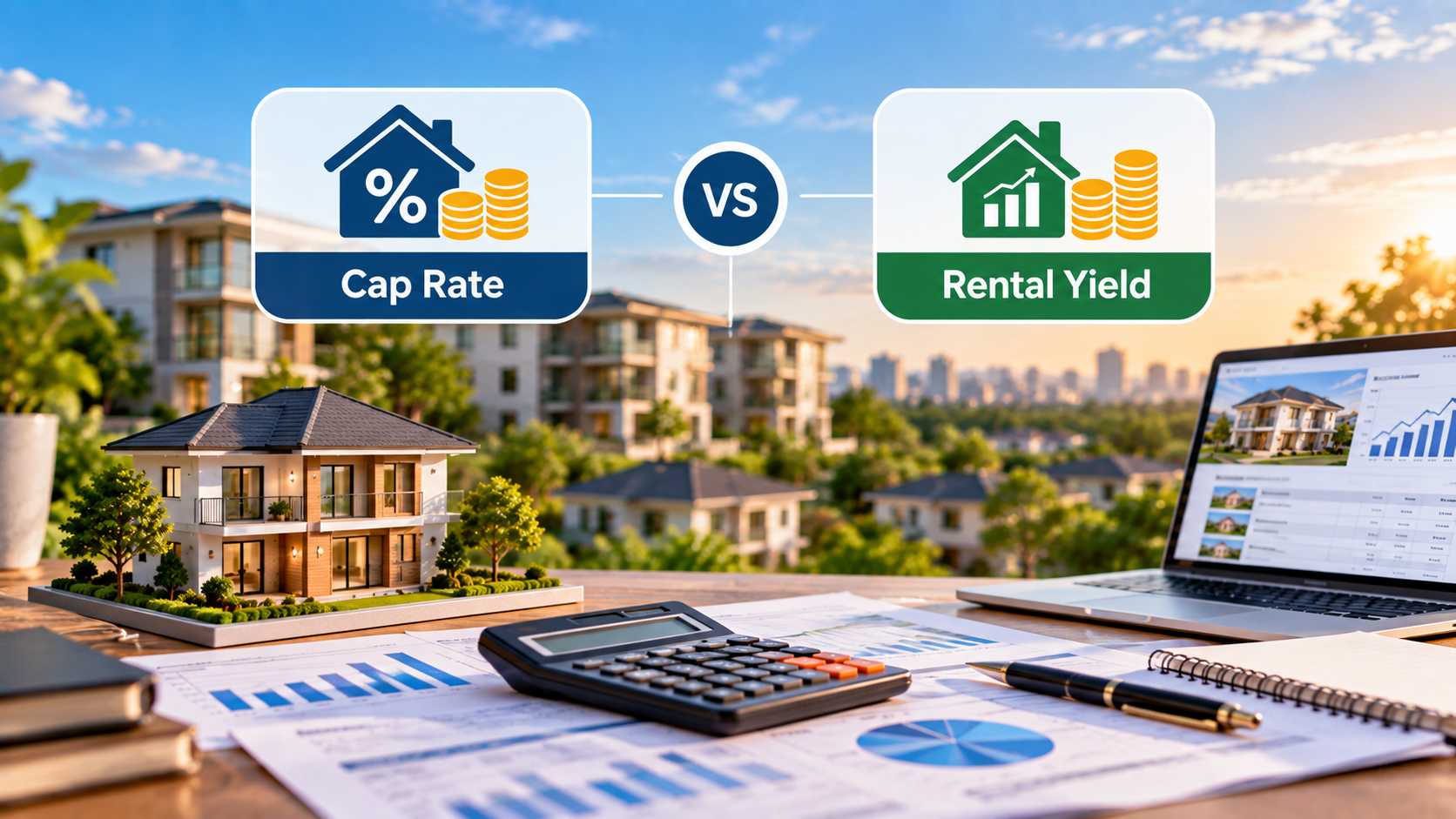
Property investment metrics can be useful, but similar-sounding percentages may measure different things. Two commonly used measures are rental yield and capitalization rate, or cap rate.
Gross rental yield is typically calculated by dividing annual gross rent by the property price or value. It is simple and useful for an initial comparison, but it does not account for operating expenses.
Net rental yield goes a step further by considering relevant property expenses before comparing income with the property value or cost. Definitions can vary, so always check which expenses are included.
Cap rate generally compares a property's net operating income with its value or purchase price. Net operating income normally reflects property operating income and expenses before financing costs, although exact conventions may differ by market.
This distinction matters. Financing choices can vary between buyers, while cap rate is commonly used to look at the underlying property operation independently of a specific mortgage structure.
No single metric captures the entire investment. A property with an appealing yield may have high maintenance requirements, concentration risk, uncertain rent assumptions or other factors that deserve attention.
When comparing properties, use the same definitions and assumptions for each one. Label inputs clearly and avoid comparing a gross metric for one property with a net metric for another.
Metrics are most useful as part of a wider analysis that also considers cash flow, financing, condition, location, risk, time horizon and your investment objectives.
Property Education
Cap Rate vs Rental Yield: What Property Investors Should Know
Understand the difference between cap rate and rental yield, what each metric measures and why assumptions should be compared consistently.
Turn research into a repeatable process.
Explore ToolsExplore practical property checklists, planners and spreadsheets.